It’s never too late to have your vaccinations
If you don’t know what you’ve had or when speak to your GP practice and they can check for you.
Vaccines can be administered in various settings:
- At school or college
- GP offices
- Walk-in pharmacies
- Student health centers or campus clinics
Common vaccines include HPV, MenACWY, Td/IPV boosters, flu nasal spray, find out more on the NHS Vaccine Page.
Vaccines protect you, your family, and your community from serious diseases and long-term disability.
- Staying vaccinated helps avoid outbreaks and protects vulnerable friends and family – not just you.
- Vaccines prevent serious long term side effects.
- If you become pregnant, having vaccinations can protect your unborn baby in the first few months of its life.
- Vaccines can protect you from some sexually transmitted diseases.
- Find out about travel vaccinations if you’re planning a gap year abroad.
Meningitis (Meningococcal Disease, MenACWY, MenB)
Meningitis (which can cause a serious blood infection called septicaemia) spreads through close contact, like living in the same house sharing utensils or kissing.
Children under 5 years old and young people aged 15-24 years old are most at risk of getting it.
Some people carry the bacteria harmlessly in the back of their nose and throat without knowing and never get ill.
If the bacteria does get into your body it can make you very unwell, very quickly, and you need urgent medical treatment.
How can I spot the signs of meningitis?
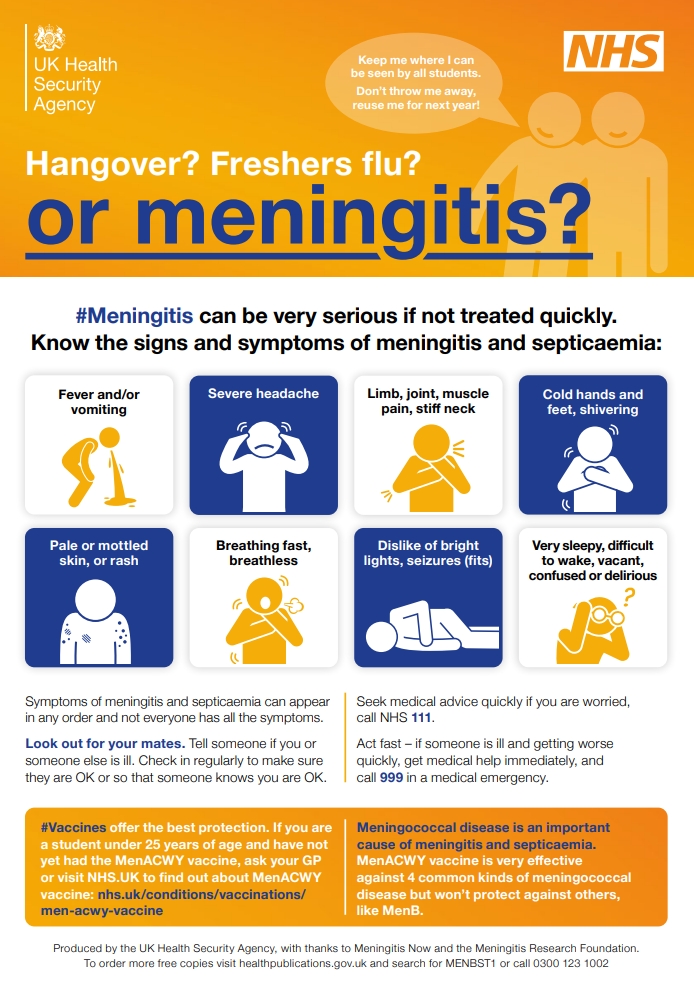
Symptoms will come on suddenly and look like the flu at first. Common signs in young people are:
- Fever
- Headache
- Vomiting
- Stiff neck (you can’t touch your chin to your chest)
- Sensitivity to bright light
- Muscle pain and aches
- Feeling drowsy and confused
- Diarrhoea and sickness in some cases
- Pale, blotchy rash – it won’t fade under a glass. The most urgent symptom. Seek immediate medical help.
In school you would have been vaccinated against Meningitis C (MenACWY vaccine), but not for the Meningitis B strain (MenB). Read this How do I Get Vaccinated Guide for Young People about the MenACWY vaccine.
The recent Meningitis B outbreak among university students in Kent affected young people who were born before the MenB vaccine was introduced by the NHS for free to babies and toddlers from 2015.
If you missed out on the MenB vaccine as a baby you can find out if you can get the vaccine on the Healthy Suffolk website and NHS website It tends to be offered to young people with specific medical conditions, so knowing the symptoms can help protect you and your friends.
If you’re at Sixth form or University: - Get up-to-date with what vaccines you have had – meningitis, measles, mumps etc
- Ask your parent/carer if you have had the MenB vaccine. (If you’re a young person born before 2015 your parent/carer would have had to pay for this vaccine unless they were offered it for free on the NHS).
- Make sure you are registered with a GP where you live at university to get help if you become unwell.
- Look out for the signs amongst your housemates.
Meningitis resources for schools and youth clubs:
- How do I Get Vaccinated Guide for Young People
- Meningitis and Septicaemia NHS poster for students in schools and sixthform
- Meningitis and Septicaemia NHS poster for university students
- Don’t ignore the signs NHS Meningitis leaflet
For more information:
- Childhood Vaccinations – Healthy Suffolk
- A visual guide to vaccines – January 2026Vaccination of individuals with uncertain or incomplete immunisation status: from 1 January 2026 – GOV.UK
Page updated on April 29th, 2026 at 03:04pm